

Endoskopie
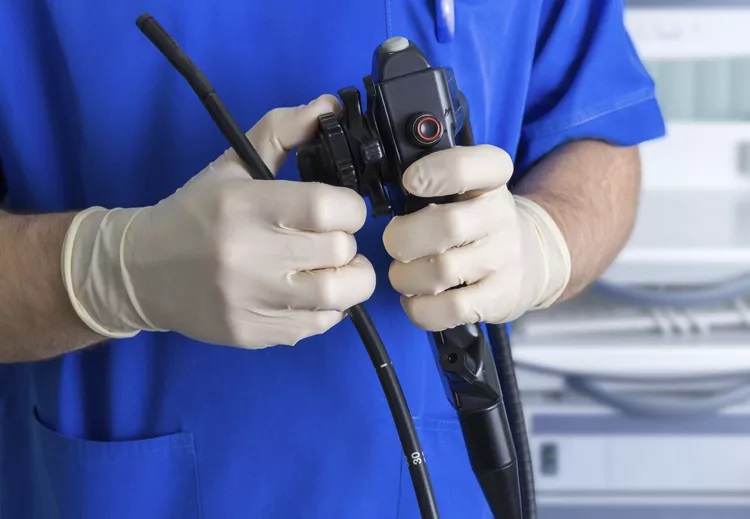
Mittels Endoskopie kann in das Innere des Körpers geschaut werden. Wir führen endoskopische Untersuchungen nicht in der Ordination sondern nur im Krankenhaus durch.
Als Eingang werden entweder der Mund [für die Speiseröhre, Magen, Zwölffingerdarm (Gastroskopie), Gallen- und Pankreasgang (ERCP), sowie den Dünndarm (Enteroskopie)] oder der After [für den Enddarm bzw. den Dickdarm gemeinsam mit dem unteren Ende des Dünndarms (Coloskopie)] verwendet.
An endoscopic examination is important in order to detect preliminary stages of bowel cancer and to be able to remove them before they degenerate. Colorectal cancer is the most common type of tumor in the gastrointestinal tract, affecting around one in 30 people over the age of 50 in Austria.
Our gastroenterologists only carry out endoscopic examinations in hospital – at Vienna General Hospital, Rudolfinerhaus or Döbling Private Clinic, depending on your preference. Prof. Gasche has over 30 years of experience in this field. Endoscopic examinations are generally harmless, but can be unpleasant or painful. We therefore use sleeping pills and sedatives to make our patients feel comfortable.
Special procedures are performed on patients with large polyps(mucosal resection), intestinal constrictions in Crohn’s disease(dilatation ), biofilm formation in irritable bowel syndrome/SIBO(bioflush) and severe damage to the intestinal flora in resistant clostridial infections, ulcerative colitis and irritable bowel syndrome/SIBO(microbiota transfer – stool transplantation). We developed the endoscopic removal of biofilms (Bioflush).
Information on preparing for a colonoscopy can be found here.